Team project · 6 people
PARSEC / AEGIS
Active electromagnetic radiation shielding for deep-space missions
My role sits across the hardware and simulation boundary: field geometry, particle tracing, shielding effectiveness, and the digital tools that help us reason about those trade-offs.
Why active shielding matters
For missions beyond low-Earth orbit, radiation becomes one of the most serious unsolved engineering constraints. Earth's magnetosphere does an enormous amount of work for us. Once you leave it, crew are exposed to galactic cosmic rays over mission timescales that passive shielding alone struggles to handle.
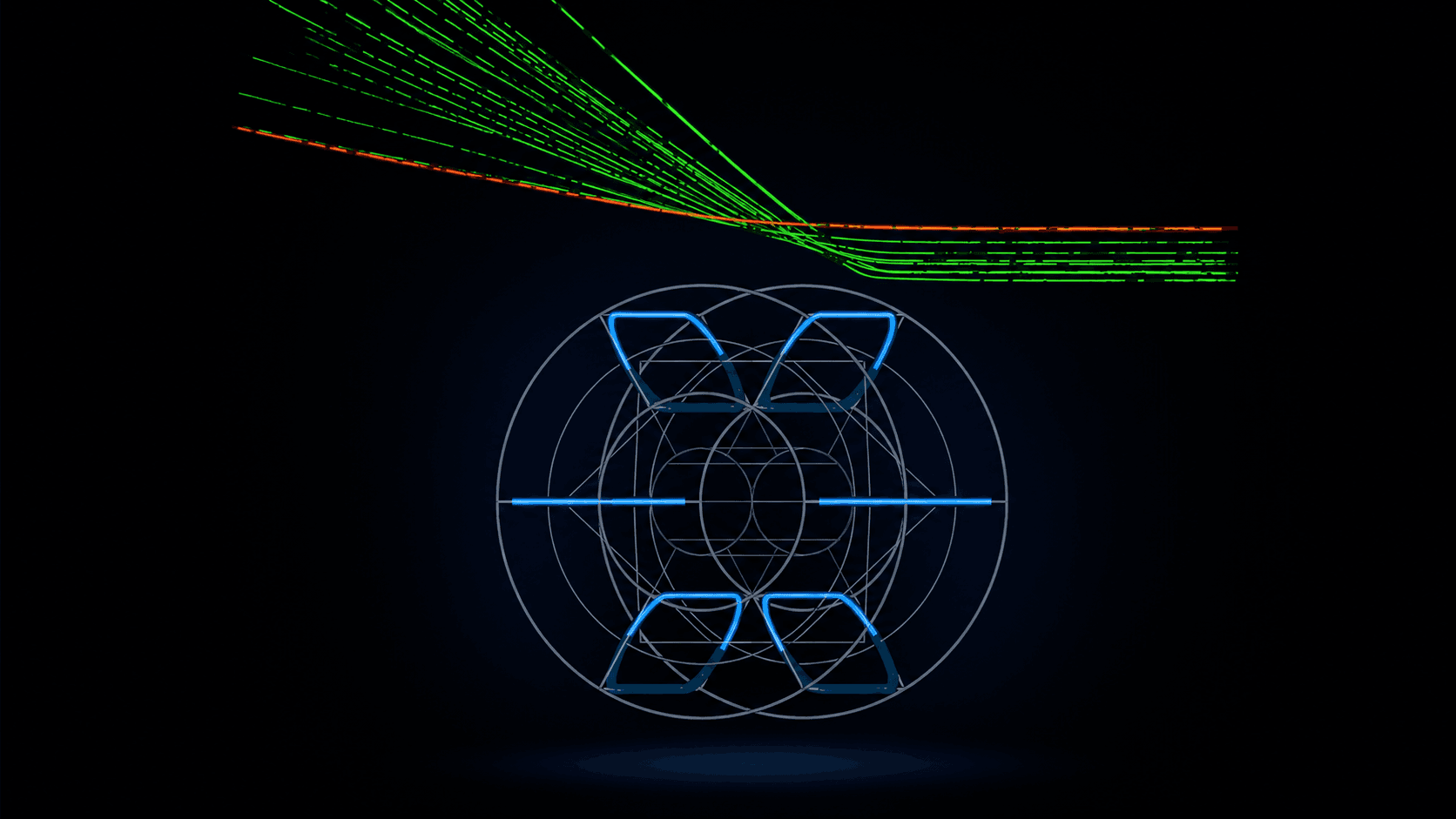
That is why the core idea here is active electromagnetic shielding. Instead of trying to absorb every incoming particle with impractical mass budgets, the goal is to shape magnetic fields that deflect charged particles away from the crew zone before they hit the habitat.
My role on the team
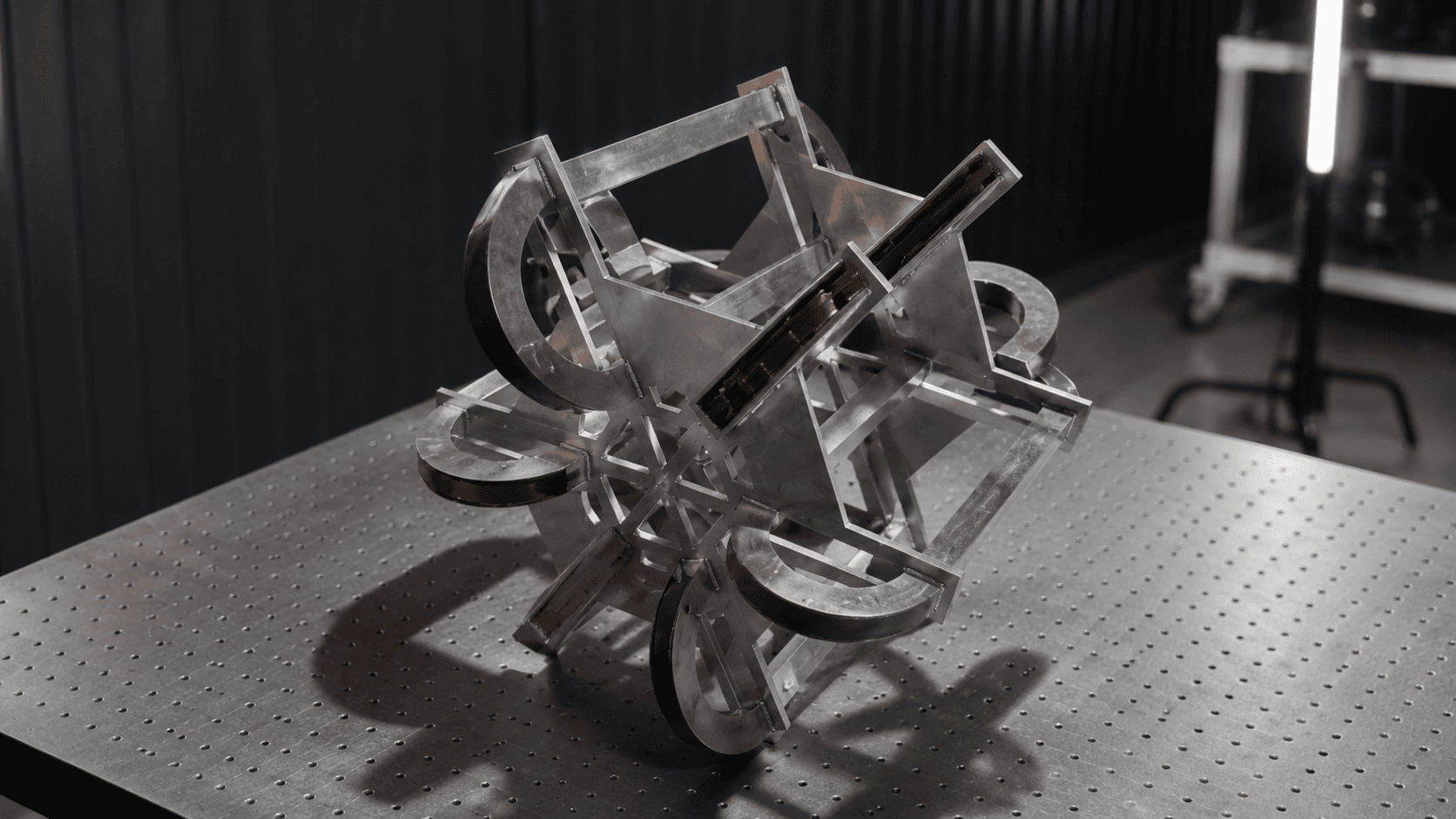
My work on AEGIS is not just one narrow slice. I contribute to both the physical system and the computational side used to analyse it. That means thinking about coil geometry, shielding gaps, and what an achievable field configuration looks like, but also about the simulation tooling needed to test those ideas. I also work on Altium to design the actual electronics used for our prototype.
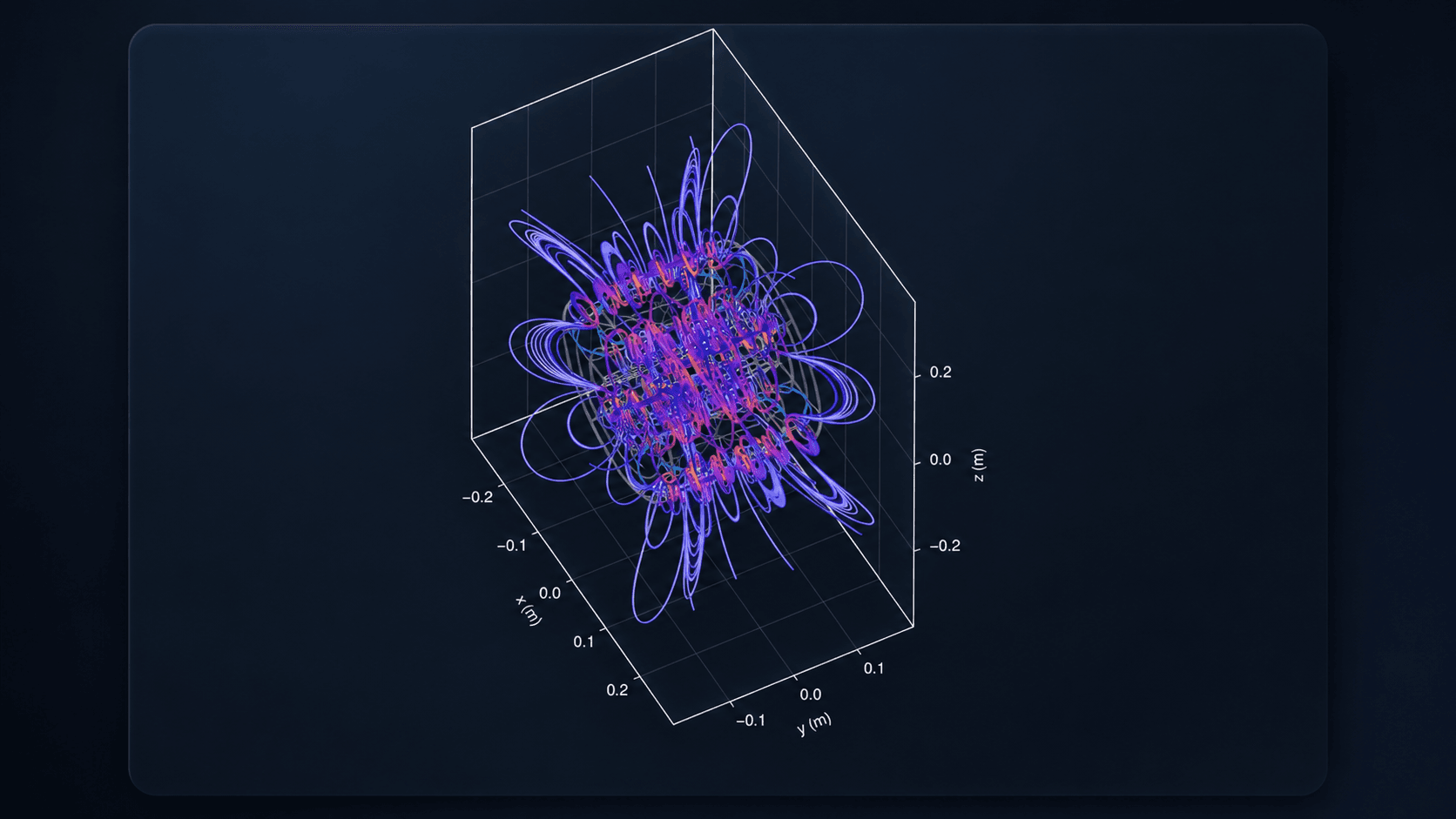
On the software side, the digital twin is critical. It gives us a way to evaluate how candidate configurations behave under a range of particle trajectories, compare outcomes, and discuss the design using something more concrete than static equations.
What I want this page to communicate
The important thing about PARSEC is that it is not just a broad concept page about space radiation. It is a real engineering effort that spans hardware, simulation, and digital tooling, and each of those parts has to stay grounded in what can actually be built and tested.
That is why the visuals here are real project material rather than stand-in diagrams: a physical prototype, actual field geometry, and trajectory plots that show how the shielding idea behaves under simulated particles.